

Reaching Everest Base Camp is a big achievement. But what happens after you stand beneath the world’s highest mountain? You still have to walk back through the same mountain trails. For some trekkers, that return journey is part of the fun. For others, it feels long after several days of walking.
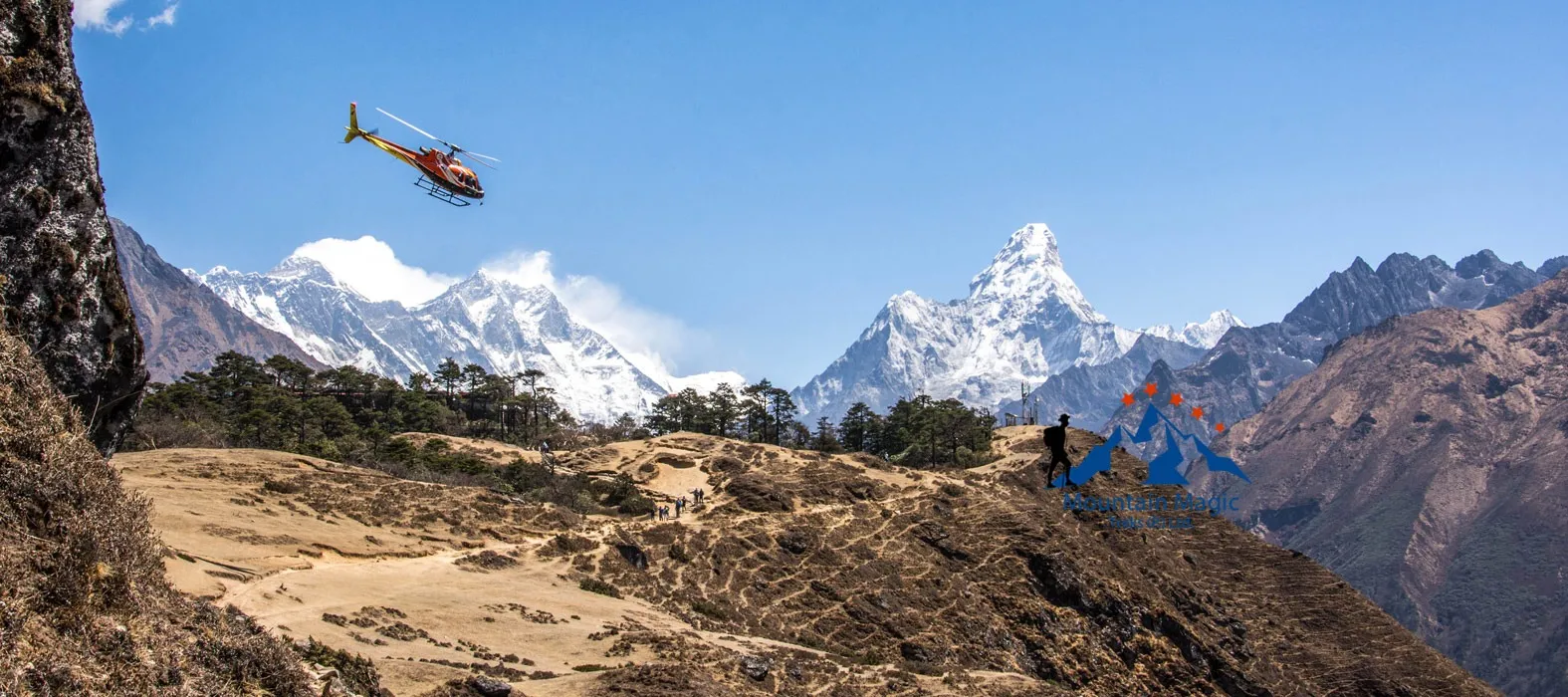
The Everest Base Camp Trek With Helicopter Return offers a different way to finish the adventure. You trek into the Khumbu region on foot, enjoy the mountain villages and trails, reach Everest Base Camp, and then take a helicopter back toward Kathmandu.
It is not simply a shortcut. It changes the final part of the trip and gives you more time to enjoy the mountains without worrying about another long downhill trek.
Why the Return Journey Can Be Challenging
Many people focus only on reaching Everest Base Camp. That makes sense. It is the main goal.
But the walk back can still take several days.
Your legs may feel tired after days of climbing, walking on rocky paths, and dealing with high altitude. Even though the return route is mostly downhill, it can put pressure on your knees and feet.
You may also lose some excitement after reaching your main goal.
This is where a helicopter return can make a real difference.
Instead of spending several more days retracing your steps, you can finish the trekking part at a high point and fly over the Himalayan landscape.
What Makes the Helicopter Return Special?
A helicopter ride in the Everest region is more than transportation.
From the air, the trail looks completely different. Paths that took hours to walk become thin lines between huge mountains. Villages appear small, and the scale of the Himalayas becomes easier to understand.
During the flight, you may see:
-
Snow-covered Himalayan peaks
-
Deep mountain valleys
-
Sherpa villages
-
Rivers cutting through the hills
-
High mountain ridges
-
Parts of the trail you walked earlier
It can feel strange in the best way. You spend days walking through the mountains, then suddenly see the same landscape from above.
A Different Kind of Trekking Experience
The Everest Base Camp Trek With Helicopter Return is useful for travelers who want the full trekking experience without spending extra days on the return route.
You still experience the important parts of a classic Everest trek.
You walk through mountain settlements. You cross suspension bridges. You pass prayer wheels and Buddhist monasteries. You meet local people and spend nights in tea houses.
Most importantly, you earn the view of Everest by walking toward it.
The helicopter does not remove the trekking challenge. It simply changes how you finish the journey.
Who May Prefer This Option?
This style of trek can work well for several types of travelers.
It may suit people with limited vacation time who want to experience Everest without adding several extra days for the return.
It can also be a good choice for trekkers who are comfortable with long hiking days but would rather avoid another extended stretch of downhill walking.
Families and older travelers may also find the shorter return more appealing, depending on their fitness and travel plans.
The Real Benefit: Saving Time
Time is often the biggest reason to choose a helicopter return.
A traditional Everest Base Camp trek requires days for both the journey to Base Camp and the walk back. The helicopter option cuts down the return section considerably.
That can leave room for other plans.
You may want an extra day in Kathmandu, a cultural tour, some rest after the trek, or simply more breathing space before your flight home.
Traveling slowly is enjoyable, but having more time does not hurt either.
Prepare for the Flight, Not Just the Trek
It is easy to think that the helicopter ride makes preparation less important.
That would be a mistake.
Mountain weather can change quickly. Flights depend on visibility, wind, and other conditions. A helicopter cannot always fly just because it is scheduled to.
Keep some flexibility in your travel plan.
It is also wise to keep essential items easy to reach. Your passport, phone, medication, money, and important documents should not be buried deep inside your main luggage.
Keep Your Expectations Realistic
A helicopter flight sounds simple, but mountain flying depends heavily on weather.
If conditions are poor, your flight may be delayed. This is normal in the Himalayas and should be part of your planning.
Do not schedule an international flight immediately after the helicopter without allowing some extra time.
A small buffer can save you from a major travel headache.
Why the Journey Still Matters
The helicopter return should not make you think the trek is only about reaching Base Camp.
The best memories often happen between the major points.
You may remember your first view of Ama Dablam, a quiet morning in a Sherpa village, a warm cup of tea after a cold walk, or the sound of prayer flags moving in the wind.
These moments cannot be measured by distance.
The Everest Base Camp Trek With Helicopter Return simply gives you another way to experience the final stage without spending several more days on the trail.
FAQs
Is the helicopter return safe?
Helicopter flights in the Everest region are operated with safety and weather conditions in mind. Flights can be delayed when conditions are not suitable.
How long does the helicopter return take?
The flight time depends on the exact pickup location and weather. The overall return is much faster than walking back to Lukla.
Can weather cancel the helicopter flight?
Yes. Mountain weather can change quickly. Delays or rescheduling are possible when visibility or flying conditions are poor.
Is this trek suitable for beginners?
The trek still requires good fitness because you must walk to Everest Base Camp. Beginners can take part if they prepare properly and follow a sensible pace.
Conclusion
The Everest Base Camp Trek With Helicopter Return gives trekkers a practical way to experience the Everest region while making the return journey shorter.
You still get the trails, villages, mountain views, high-altitude adventure, and the satisfaction of reaching Base Camp on foot. Then, instead of walking back for several more days, you can see the Himalayas from a completely different angle.
For travelers who value both adventure and time, that can be a very smart way to end an unforgettable Everest journey.